

How to Use GLP-1 Medications Safely: The Truth About Weight Loss Drugs and Muscle Preservation
Summary
This article explains how to use GLP-1 medications responsibly for weight loss while preserving muscle through proper training and protein intake.
GLP-1 medications like Ozempic, Wegovy, and Mounjaro have revolutionized weight loss—but they’ve also created a dangerous misconception. Millions of people are celebrating dramatic drops on the scale without realizing they’re losing nearly as much muscle as fat. The pharmaceutical companies tout impressive statistics about “losing 20% of your body weight,” but they’re not telling you the full story: without resistance training and adequate protein intake, you’re not just getting smaller—you’re getting weaker, slower, and setting yourself up for rapid weight regain. As a NASM-certified personal trainer specializing in weight loss and body composition, I’ve watched this crisis unfold in real time. If you’re taking or considering GLP-1 medications, this is everything you need to know to use them safely, preserve your muscle mass, protect your metabolism, and achieve results that actually last.
What Are GLP-1 Medications and Why Are They So Effective?
GLP-1 receptor agonists—commonly known by brand names like Ozempic, Wegovy, Mounjaro, and Zepbound—have exploded in popularity as weight loss solutions. These medications mimic a hormone called glucagon-like peptide-1 (GLP-1) that your body naturally produces in response to eating.
Here’s how they work:
- Slow gastric emptying – Food stays in your stomach longer, keeping you fuller
- Reduce appetite signals – They act on brain receptors that control hunger
- Improve insulin sensitivity – Better blood sugar regulation reduces cravings
- Decrease food noise – Many users report obsessive thoughts about food simply disappear
The result? People eat significantly less without the constant mental battle against hunger. Clinical trials show average weight loss of 15–22% of total body weight over 68 weeks —results that seem almost miraculous compared to traditional diet-only approaches.
But here’s the critical question nobody’s asking: What kind of weight are you losing?
Understanding Energy Balance: The Non-Negotiable Law of Weight Loss
Before we dive into the dangers of GLP-1 misuse, you need to understand one fundamental truth: all weight loss requires a calorie deficit.
Energy balance is simple physics:
- Calorie deficit = You lose weight (consuming fewer calories than you burn)
- Calorie maintenance = Your weight stays stable
- Calorie surplus = You gain weight (consuming more calories than you burn)
GLP-1 medications don’t defy this law—they simply make creating a deficit easier by dramatically reducing your appetite. You’re not losing weight because of pharmaceutical magic; you’re losing weight because you’re finally eating less than your body burns.
Ways to Create a Calorie Deficit
There are only three legitimate approaches:
- Eat less (reduce calorie intake)
- Move more (increase calorie expenditure through activity)
- Combine both (the most effective and sustainable approach)
GLP-1 medications are a powerful tool for approach #1—they make eating less feel effortless. But this is precisely where the danger begins.
The Dangerous Truth: What “Losing 20% of Your Weight” Actually Means
Pharmaceutical companies and medical providers tout impressive statistics: “Lose up to 20% of your body weight!”
Sounds amazing, right? It’s also dangerously misleading.
When they say “20% of your weight,” they mean total body weight—not 20% of your body fat. This distinction is everything.
The Composition of Weight Loss Matters More Than the Number
Your body weight consists of:
- Fat mass
- Lean muscle mass
- Bone density
- Water weight
- Organ tissue
When you lose weight through severe calorie restriction alone—which is exactly what happens when GLP-1 users simply stop eating—you don’t just lose fat. You lose significant amounts of muscle tissue.
Research on rapid weight loss without resistance training shows that 25–40% of weight lost comes from lean muscle mass, not fat. Some studies on GLP-1 users show even higher rates of muscle loss.
Let’s put this in perspective:
Example: 200-pound person loses 20% (40 pounds)
- With GLP-1 alone (no training/protein):
- Fat lost: ~24–30 pounds
- Muscle lost: ~10–16 pounds
- Result: Weaker, slower metabolism, “skinny fat” appearance
- With GLP-1 + resistance training + high protein:
- Fat lost: ~36–38 pounds
- Muscle lost: ~2–4 pounds
- Result: Leaner, stronger, maintained metabolism, defined physique
Research from the National Institutes of Health confirms that up to 40% of weight loss with semaglutide can be attributed to lean body mass.
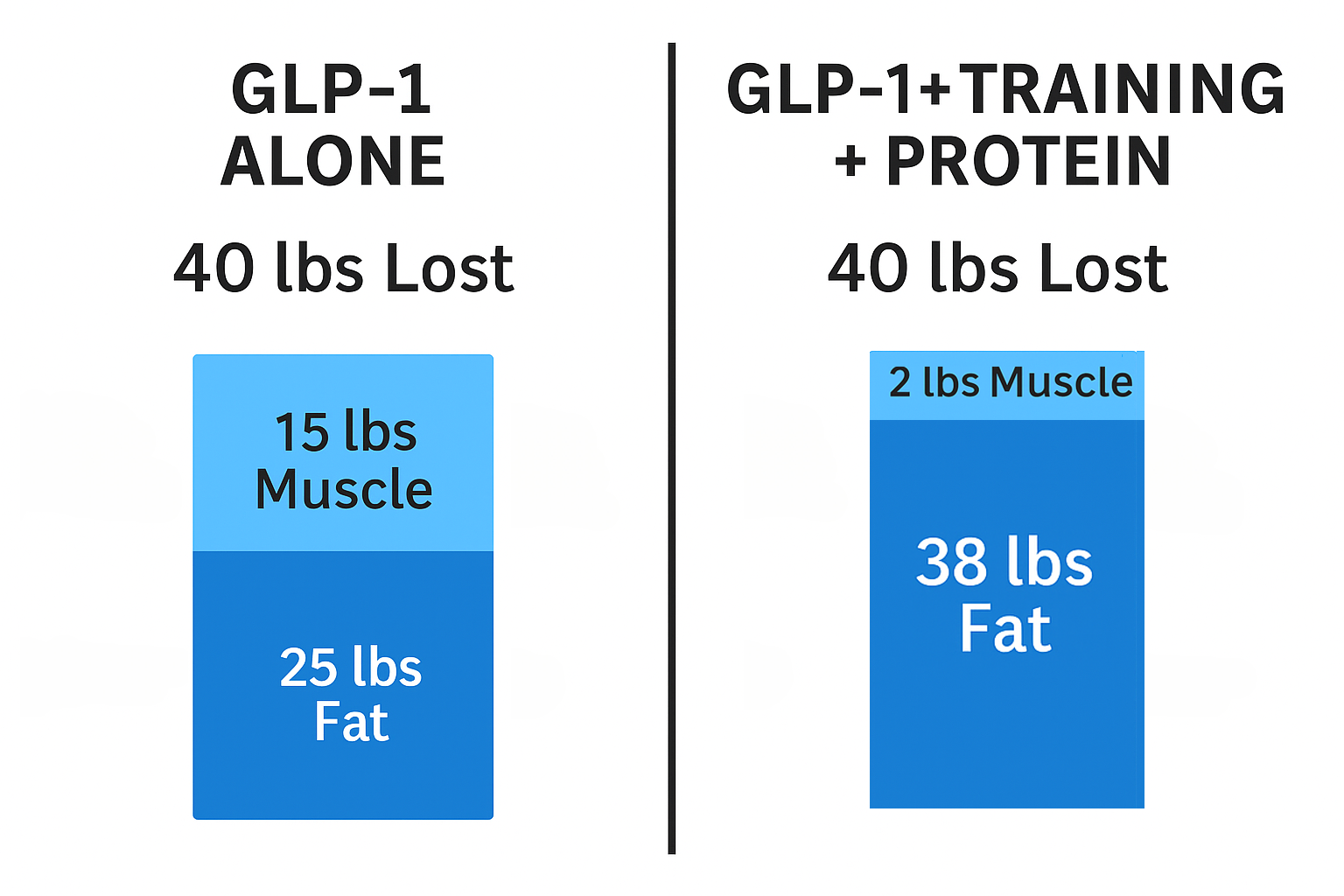
The scale might show the same number, but your body composition, metabolic health, and long-term success are completely different.
Why Muscle Loss Is Metabolically Catastrophic
Losing muscle isn’t just about aesthetics or strength—it’s about your metabolic future.
Muscle Is Metabolically Active Tissue
Every pound of muscle you carry burns approximately 6–10 calories per day at rest. Fat tissue burns roughly 2 calories per pound per day. When you lose significant muscle mass, you’re literally lowering your metabolic rate—the number of calories your body burns just to stay alive.
Studies show that tissue losses and metabolic adaptations both contribute to reduced resting metabolic rate following weight loss.
Here’s what happens:
- You start GLP-1 medication with a maintenance calorie need of, say, 2,000 calories/day
- You drastically reduce food intake to 1,000–1,200 calories/day (common with appetite suppression)
- You lose 40 pounds over 6–9 months (15 pounds of muscle, 25 pounds of fat)
- Your new maintenance drops to 1,600–1,700 calories/day due to muscle loss
- You stop the medication (because you can’t stay on it forever or afford it long-term)
- Your appetite returns to normal or higher (rebound hunger is common)
- You eat 2,000 calories again—now a surplus for your slower metabolism
- You rapidly regain weight—mostly as fat, not muscle
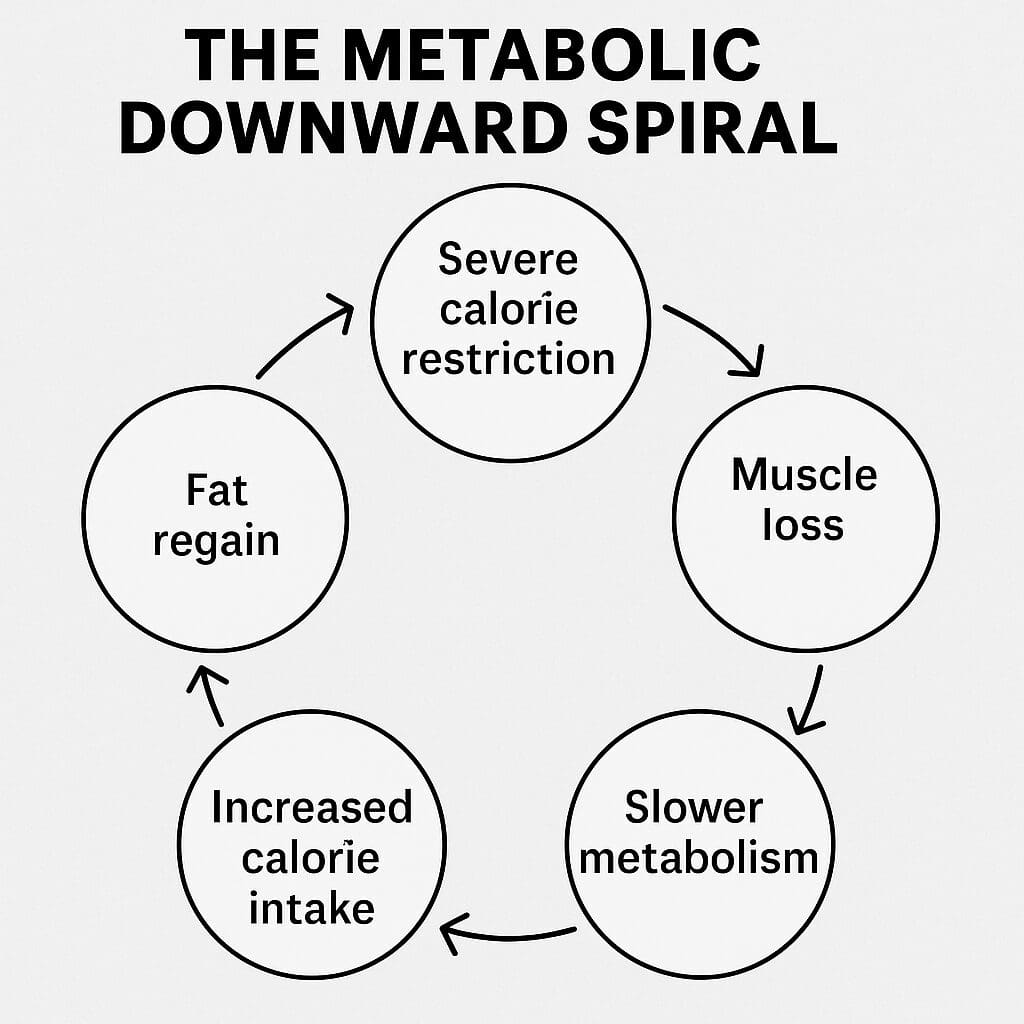
You’ve now created a worse metabolic situation than when you started. This is why so many people regain all the weight (plus more) after stopping GLP-1 medications.
Additional Consequences of Muscle Loss
- Decreased strength and physical function – Daily activities become harder
- Increased injury risk – Weaker muscles and connective tissue
- Poor body composition – “Skinny fat” appearance despite weight loss
- Reduced bone density – Muscle loss accelerates bone loss, especially in women
- Insulin resistance – Muscle is your primary glucose disposal site; less muscle = worse blood sugar control
- Accelerated aging – Sarcopenia (muscle loss) is directly linked to frailty and mortality
The Protein Problem: Why Most GLP-1 Users Aren’t Eating Enough
One of the most dangerous side effects of GLP-1 medications is how effectively they suppress appetite—to the point where users struggle to eat adequate protein.
The problem: When you’re only eating 800–1,200 calories per day because you have zero appetite, hitting your protein targets becomes nearly impossible.
How Much Protein Do You Actually Need?
For someone using GLP-1 medications and trying to preserve muscle during weight loss, research supports:
0.8–1.2 grams of protein per pound of goal body weight
For a 200-pound person targeting 160 pounds:
- Minimum: 128 grams/day
- Optimal: 160–192 grams/day
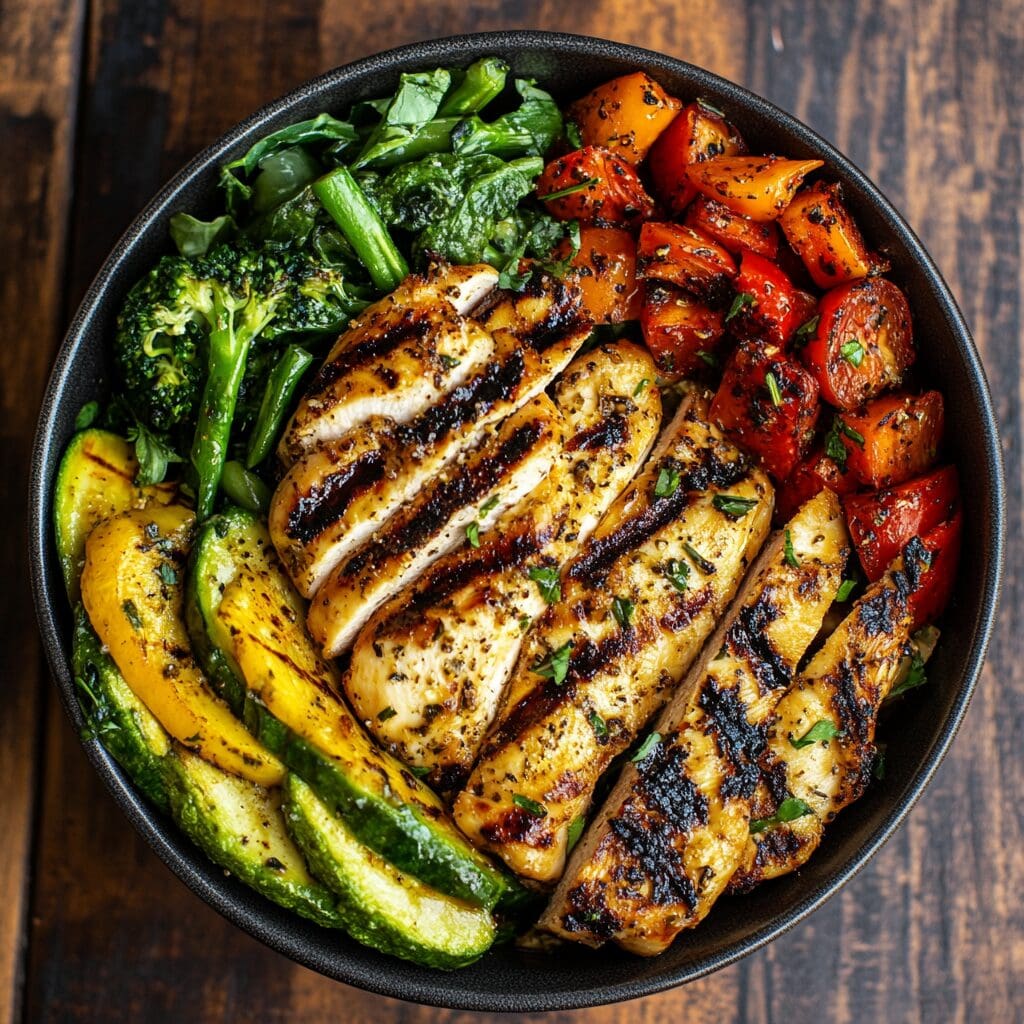
At 4 calories per gram, that’s 512–768 calories from protein alone—often more than half of what GLP-1 users are consuming total.
What Happens With Inadequate Protein
Without sufficient protein intake:
- Your body cannibalizes muscle tissue for amino acids
- Muscle protein synthesis drops dramatically
- Recovery from any exercise becomes impaired
- Immune function weakens
- Hair loss, brittle nails, and skin issues emerge
You cannot preserve muscle in a calorie deficit without adequate protein. Period.
Resistance Training: The Non-Negotiable Component
If adequate protein is the foundation, resistance training is the structure that preserves your muscle while using GLP-1 medications.
Why Resistance Training Is Essential
Your body is ruthlessly efficient. In a calorie deficit, it will shed any tissue it doesn’t absolutely need to survive. Muscle is metabolically expensive—your body will gladly sacrifice it unless you give it a reason not to.
Resistance training sends a powerful signal: “I need this muscle. I’m using it. Don’t break it down.”
Progressive resistance training—lifting weights, using resistance bands, or bodyweight exercises with increasing difficulty—creates mechanical tension and metabolic stress that tells your body to prioritize muscle preservation even when calories are low.
What Happens Without Resistance Training
Studies on weight loss without resistance training consistently show:
- 25–40% of weight lost comes from muscle
- Significant decreases in resting metabolic rate
- Rapid weight regain after diet ends
- Poor body composition outcomes
However, research demonstrates that exercise has a remarkable ability to preserve lean mass even with severe energy deficits.
Research on GLP-1 users specifically is now emerging with alarming findings: without structured resistance training, muscle loss percentages are even higher than traditional dieting—some studies suggesting up to 40% of weight lost is lean mass.

The Right Training Approach
Research confirms that resistance training significantly improves fat-free mass preservation during calorie restriction.
You don’t need to become a bodybuilder, but you do need:
- 2–4 resistance training sessions per week
- Progressive overload (gradually increasing weight, reps, or difficulty)
- Full-body compound movements (squats, deadlifts, presses, rows, lunges)
- Adequate recovery between sessions
- Consistency over months, not weeks
This is where professional coaching becomes invaluable—especially when your energy and appetite are suppressed.
GLP-1 Medications Are a Tool, Not a Magic Pill
Let me be crystal clear: GLP-1 medications can be an incredibly effective tool for weight loss when used correctly.
The problem isn’t the medication itself—it’s how people are using it.
The Wrong Approach (Dangerously Common)
❌ Start GLP-1 medication
❌ Stop eating almost entirely because appetite disappears
❌ Do no resistance training
❌ Consume inadequate protein
❌ Lose significant weight quickly
❌ Feel weak, tired, and look “skinny fat”
❌ Stop medication due to cost or side effects
❌ Regain all weight (plus more) within 12–18 months
❌ End up in worse metabolic shape than before
The Right Approach (Evidence-Based and Sustainable)
✅ Start GLP-1 medication under medical supervision
✅ Work with a qualified coach to design a structured resistance training program
✅ Implement a high-protein nutrition plan (even with reduced appetite)
✅ Track body composition, not just scale weight
✅ Lose weight at a moderate pace (1–2 pounds/week)
✅ Preserve muscle mass and metabolic rate
✅ Build sustainable habits and strength
✅ Transition off medication with maintained results
✅ Keep the weight off long-term with better body composition
The medication controls your appetite. Your training and nutrition determine what kind of weight you lose.
Real Talk: The Pharmaceutical Industry Isn’t Telling You This
Here’s what the commercials and doctor’s offices often won’t emphasize:
These medications were never designed to be used alone. Clinical trials that produced those impressive weight loss numbers included dietary counseling, exercise recommendations, and behavior modification support.
But in real-world prescription practices, many patients are simply given the medication with minimal guidance on training or nutrition. The focus is entirely on the scale number—not body composition, not metabolic health, not long-term sustainability.
The result? Millions of people are unknowingly destroying their muscle mass and setting themselves up for metabolic disaster.
This isn’t fear-mongering—this is what the research shows. And as a NASM-certified personal trainer with specializations in weight loss, nutrition coaching, and corrective exercise, I’ve seen the aftermath firsthand.
How I Help Clients Use GLP-1 Medications Safely and Effectively
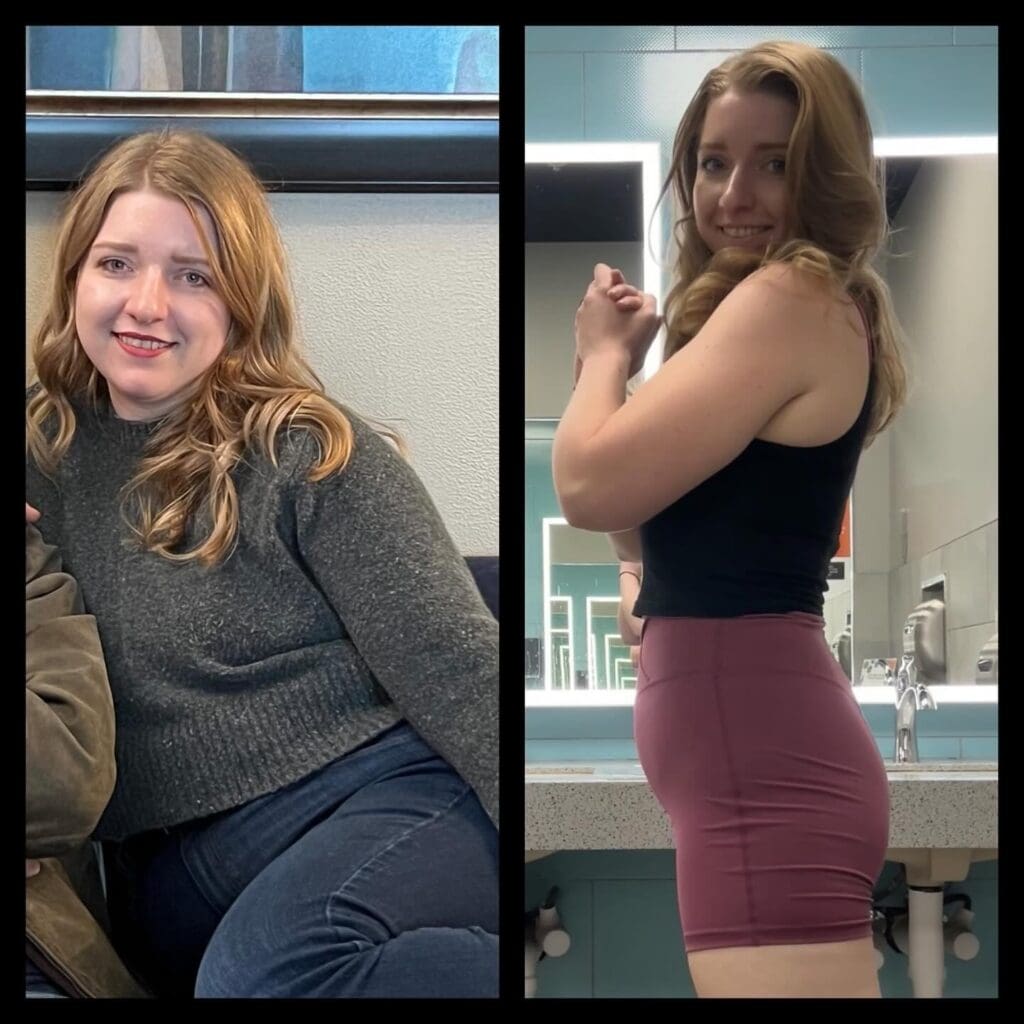
If you’re currently taking or considering GLP-1 medications, you need a structured plan that addresses the real challenges:
What My Coaching Includes
1. Customized Resistance Training Programs
- Designed around your current fitness level and available equipment
- Progressive overload protocols to preserve and build muscle
- Injury-prevention and corrective exercise strategies
- Flexible scheduling that fits your life
2. High-Protein Nutrition Planning
- Macro targets optimized for muscle preservation during weight loss
- Meal timing strategies to maximize protein synthesis
- Practical solutions for hitting protein goals with suppressed appetite
- Flexible meal planning that works with your preferences
3. Body Composition Tracking
- Regular measurements beyond just scale weight
- Body fat percentage and lean mass monitoring
- Progress photos and circumference tracking
- Strength performance metrics
4. Accountability and Education
- Weekly video check-ins via the Everfit app
- Habit tracking and behavior coaching
- Science-based education on metabolism and body composition
- Real-time adjustments based on your biofeedback
5. Long-Term Sustainability Planning
- Strategies for maintaining results after medication
- Metabolic adaptation management
- Transition protocols for coming off GLP-1s
- Lifestyle integration for permanent change
My Approach Is Different
I don’t just hand you a generic workout plan and wish you luck. As a NASM-certified specialist in multiple disciplines (CPT, CNC, WLS, CES, PBC, VCS, SFC), I understand the science of body composition, metabolism, and sustainable fat loss.
I’ve helped clients:
- Lose significant body fat while maintaining or building muscle
- Prepare for bodybuilding competitions with evidence-based protocols
- Overcome weight loss plateaus through strategic training and nutrition adjustments
- Build sustainable habits that last long after any medication stops
If you’re using GLP-1 medications, you need a coach who understands how to preserve your muscle and metabolism—not just celebrate a lower scale number.
The Bottom Line: Protect Your Muscle, Protect Your Metabolism
GLP-1 medications are powerful appetite suppressants that make creating a calorie deficit easier than ever before. But easier doesn’t mean safer, and weight loss doesn’t automatically mean fat loss.
Without resistance training and adequate protein, you will lose dangerous amounts of muscle mass. You will lower your metabolism. You will likely regain the weight. And you’ll end up in worse shape than when you started.
But with the right approach—structured training, high-protein nutrition, and professional coaching—GLP-1 medications can be an effective tool in a comprehensive fat loss strategy that preserves your muscle, maintains your metabolism, and sets you up for long-term success.
Don’t let pharmaceutical marketing mislead you into thinking the medication alone is enough. It’s not.
You deserve better than just a lower number on the scale. You deserve to be stronger, leaner, and healthier for life.
Ready to Use GLP-1 Medications the Right Way?
If you’re currently taking or considering GLP-1 medications and want to do it safely—preserving your muscle mass and metabolic health—I can help.
My online coaching programs include:
- Custom resistance training plans
- High-protein nutrition guidance
- Weekly video check-ins and accountability
- Body composition tracking (not just scale weight)
- Science-backed strategies for sustainable results
Don’t waste your investment in GLP-1 medications by losing muscle instead of fat.
👉 Sign up for online coaching today at swolegoalsfitness.com and let’s build a plan that actually works for your long-term health and fitness goals.
Joel Jenkins is a NASM-certified personal trainer and certified nutrition coach with specializations in weight loss, corrective exercise, physique coaching, and virtual coaching (CPT, CNC, WLS, CES, PBC, VCS, SFC). Based in Oklahoma City, Joel helps clients achieve sustainable fat loss through evidence-based training and nutrition strategies—both in-person and online. Learn more at swolegoalsfitness.com.